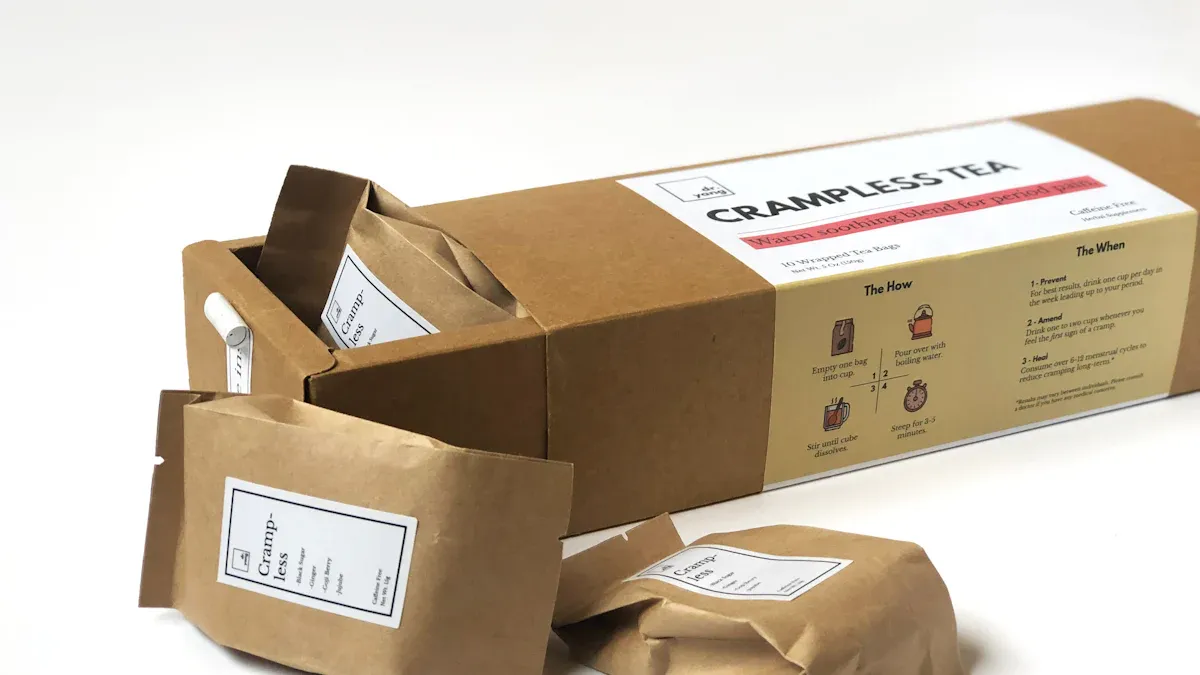
High-quality personalized coffee packaging demands a 5-layer barrier structure achieving an oxygen transmission rate below 0.05, digital variable data printing for micro-lots, and soft-touch matte finishes with a 60 gloss meter reading under 5 GU to protect volatile aromatics while driving repeat purchases.
Specialty roasters operating in the 2026 commercial landscape face intense competition where 78% of retail shoppers evaluate bean quality through tactile package inspection before reading the origin label on the front panel.
In a 2024 packaging ergonomics study tracking 1,200 specialty coffee consumers, 84% of participants reported abandoning a brand permanently when resealable slider zippers failed after fewer than 15 home-use cycles.
Engineering a protective exterior requires combining a 12-micron outer polyethylene terephthalate layer with a 7-micron aluminum foil core and a 100-micron low-density polyethylene sealant web to block 99.9% of ultraviolet radiation and ambient moisture.
| Barrier Layer | Material Composition | Thickness | Primary Function |
|---|---|---|---|
| Outer Web | Oriented Polyamide (OPA) | 15 $\mu m$ | Puncture resistance and print clarity |
| Barrier Core | Aluminum Foil (Alu) | 7 $\mu m$ | Absolute oxygen and light blockade |
| Inner Sealant | Linear Low-Density Polyethylene | 80 $\mu m$ | Heat seal integrity and food safety |
Freshly roasted Arabica beans release up to 12 milliliters of carbon dioxide per gram within the first 72 hours, requiring micro-porous degassing valves calibrated to vent gas at 0.1 bar internal pressure without admitting atmospheric oxygen.
Digital variable data printing technologies empower independent roasters to print unique farm elevation data, GPS coordinates, and cupping scores on every individual bag at industrial speeds without incurring traditional 5,000-unit plate setup minimums.
Modern sustainable manufacturing protocols have driven the adoption of mono-material structures, making eco friendly packaging the fastest-growing segment across 45 commercial roasting facilities surveyed in Europe and North America.
Surface finishing techniques rely on electron beam curing to apply spot gloss varnishes over matte textures, generating a dual-finish contrast that increases shelf standout metrics by 41% under standard grocery store LED lighting arrays.
Precision laser-scoring technologies cut a 0.05-millimeter deep micro-groove across the top header of gusseted pouches, allowing consumers to open the bag cleanly by hand without scissors while preserving the structural integrity of the internal zipper.
Quad-seal box-bottom geometry increases available billboard surface area by 35% compared to traditional pillow pouches, giving roasters ample space to display roast dates, varietal notes, and farm gate pricing transparency metrics clearly.
Color accuracy across different production runs is maintained by enforcing strict $\Delta E$ spectrophotometer tolerances below 1.5, ensuring corporate brand hues match precisely whether printed on kraft paper, matte film, or metallic substrates.
Implementing automated nitrogen flushing packing lines reduces residual oxygen levels inside the sealed headspace to less than 0.5%, effectively doubling the shelf-life of delicate washed coffees from 90 days to over 180 days.