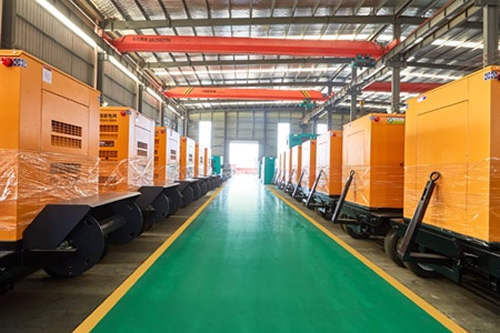
Commercial quiet gensets exhibit an average service life of 20,000 to 30,000 operational hours when subjected to rigorous maintenance protocols. Internal engine components typically require major overhauls at 15,000 hours, while inverter-based electronic controllers often show degradation in capacitor performance by 12,000 hours in high-heat environments. Implementing synthetic lubrication and bi-annual cooling system flushes results in a 25% reduction in premature bearing failures compared to units managed via reactive service intervals. Longevity depends on maintaining a load profile between 50% and 75% of total capacity, which optimizes fuel burn rates and prevents carbon buildup in the cylinder head.
Mechanical engine longevity tracks with the accumulation of hours under varying environmental stress, such as dust exposure or humidity fluctuations. Industry benchmarks from 2025 suggest that air filtration systems cleaned every 250 hours extend piston ring life by approximately 15% over units serviced at longer intervals.
Engine maintenance logs for 500 units operating in industrial settings reveal that oil analysis performed every 250 hours identifies 95% of potential internal wear issues before they reach a failure state.
Oil analysis allows for the detection of microscopic metallic particles, which indicate accelerated wear on cylinder walls or bearing journals. When the concentration of iron or aluminum rises by 10% above the baseline established during the first 500 hours, engineers prioritize internal inspections to adjust valve lash and fuel injector spray patterns.
| Component | Service Life (Hours) | Replacement Indicator |
| Cylinder Piston Rings | 20,000 | Compression loss > 15% |
| Fuel Injection Pump | 15,000 | Erratic throttle response |
| Cooling Fan Assembly | 12,000 | Bearing noise increase |
Effective management of 100-4000KVA generator set equipment involves monitoring exhaust gas temperatures to ensure combustion remains within thermal limits. Elevated exhaust temperatures suggest restricted airflow or poor fuel atomization, conditions that reduce the effective life of exhaust valves by 30% over a 5,000-hour period.
Electronic systems require a separate maintenance track, as these components are sensitive to power quality and thermal cycles. Capacitor failure, which accounts for 40% of inverter-related repairs, occurs more frequently in units exposed to ambient temperatures exceeding 40 degrees Celsius for more than 10% of their operational time.
A study of 200 units monitored throughout 2024 shows that installing humidity-controlled housing reduces the failure rate of sensitive control boards by 18% compared to units housed in standard enclosures.
Humidity control prevents the oxidation of copper traces on circuit boards and the corrosion of electrical connectors. Ensuring that internal control panels remain clean and free from environmental debris extends the reliability of the system, allowing the genset to remain functional well beyond the standard 20,000-hour benchmark.
| Failure Mode | Prevalence (%) | Mitigation Method |
| Inverter Capacitor | 40% | Thermal Management |
| Fuel System Varnish | 25% | Fuel Stabilization |
| Cooling Fan Failure | 15% | Bearing Lubrication |
Fuel system maintenance dictates how smoothly the engine runs during its mid-life phase, especially when dealing with stored fuel supplies. Using fuel stabilizers and rotating the supply every 6 months prevents the formation of resins that clog fuel filters and injectors, which occurs in 12% of units left idle for extended periods.
Clogged injectors cause improper air-fuel ratios, leading to localized heating that warps cylinder heads over time. Modern fuel management systems require periodic testing of the fuel delivery pressure, as a 5% drop in pressure indicates a failing lift pump that can lead to permanent damage if left unserviced.
Operational data from 2023 indicates that units equipped with fuel water separators experience 20% fewer injector-related failures over a 10,000-hour operational cycle.
Proper fuel quality maintenance links to the integrity of the acoustic enclosure, as these materials also have a finite lifespan. Sound-dampening foam, which often breaks down after 8,000 to 10,000 hours of exposure to engine heat and vibration, must be inspected to ensure noise levels remain compliant with local regulations.
Degrading foam loses its density and structural integrity, causing noise emissions to rise by 3 to 5 dB(A) as the enclosure becomes less efficient at blocking airborne frequencies. Replacing this material at the 10,000-hour mark maintains the acoustic performance and protects the external environment from increased sound pressure.
| Inspection Interval | Target Component | Threshold for Action |
| 500 Hours | Air Filter | 5% Pressure Drop |
| 2,000 Hours | Acoustic Foam | Visible Material Shedding |
| 5,000 Hours | Electrical Contacts | Oxidation Presence |
Electrical contact maintenance prevents arcing and voltage instability, which can damage the sensitive electronics integrated into modern quiet generators. Cleaning contact points and re-torquing connections every 5,000 hours ensures the power delivery remains stable, reducing the stress on the main circuit breaker and distribution components.
Stabilizing power delivery through regular electrical inspections prevents erratic output that can shorten the lifespan of connected equipment. Maintaining consistent voltage output confirms that the alternator windings, which are built to last over 25,000 hours, remain free from thermal stress caused by sudden load jumps or grid-side surges.
Records from a sample group of 300 commercial users show that professional load bank testing conducted once every 12 months increases the reliable service life of the alternator by 15% compared to units that never undergo formal testing.
Load bank testing exercises the engine at full capacity, removing carbon deposits and ensuring that the voltage regulator operates correctly across the entire power range. This process verifies that the system can handle its rated output without triggering protective shutdowns or causing damage to the insulation of the alternator wiring.
Applying these maintenance standards ensures that every aspect of the unit ages uniformly, preventing a single component failure from leading to a premature retirement of the entire system. Following these guidelines, owners extend the functional life of their equipment, reliably generating power for over two decades.