Automatic packaging machines keep seals consistent by controlling heat, pressure, contact time, film position, and product placement within defined operating ranges. A line running at 100 packs per minute produces 6,000 packs per hour, so a 1% sealing defect rate can create 60 questionable packs in that period. Modern systems use temperature sensors, servo motion, registration sensors, pressure monitoring, recipe control, alarms, and reject stations to limit that exposure. Seal quality depends on repeatable process conditions, not heat alone. ASTM F88/F88M provides a recognized method for measuring seal strength, while ASTM F2096 addresses gross leak detection through internal pressurization. Together with maintenance records and production data, these controls help manufacturers keep packaging performance measurable rather than dependent on visual checks.
A heat seal forms when the sealant layers reach an appropriate temperature while pressure holds the surfaces together for sufficient time. Changing only one setting can change the result: raising temperature may compensate for shorter contact time, but excessive heat can thin or distort the sealant layer. On a machine producing 80 packs per minute in 2026, only 15 minutes of operation represents 1,200 packages, so a temperature problem that lasts one quarter of an hour can affect a substantial production quantity.
That is why commercial equipment normally measures sealing temperature close to the working area instead of relying only on heater output. A controller compares sensor readings with the selected setpoint and changes heater power as required. For a material whose qualified sealing range is 130–150°C, operation at 140°C provides more process margin than operation close to either boundary; the actual range must come from the film supplier and the manufacturer's process qualification.
Temperature readings also need context. A controller displaying 140°C does not prove that every millimeter of a sealing jaw has the same surface temperature. Heater placement, jaw mass, sensor position, contamination, worn coatings, and repeated contact with cooler film can create local differences.
Pressure provides the next part of the seal. Two heated film layers need sufficiently even contact across the intended seal width, which makes jaw alignment, actuator condition, sealing-face flatness, and pressure stability relevant to package quality. A 10 mm-wide seal with good bonding across 95% of its width can still contain a leakage path if the remaining area forms a continuous channel from the package interior to the outside.
Contact time then connects machine speed with thermal performance. At 60 packs per minute, the machine completes one package every 1.0 second; at 120 packs per minute, only 0.5 second is available per package cycle. The entire cycle is not available for sealing because feeding, filling, jaw opening, cutting, and package movement also require time, so increasing output without reviewing the sealing motion can reduce the time available for heat transfer.
Servo-controlled machines can manage jaw position and motion more accurately than systems that depend entirely on fixed mechanical timing. A programmed motion profile can determine when the jaws close, how long they remain engaged, and when they release. Stable timing matters because a 0.1-second change is 20% of a 0.5-second package cycle, even though 0.1 second may sound insignificant when considered by itself.
Film handling becomes important before the jaws close. Packaging material has to reach the sealing area flat, correctly tensioned, and in the intended position. Registration sensors read printed marks, encoders measure machine movement, and servo-fed rollers can correct film advance. If a 200 mm package is repeatedly fed 2 mm too far, the positional error is already 1% of package length and can move printed information, cutting lines, or seal locations away from their specified positions.
Wrinkles create another problem because a folded film layer changes the thickness passing between the jaws. The seal may look complete from the outside while a narrow channel remains along the fold. Web guides, dancer systems, tension controls, properly aligned rollers, and accurate film forming reduce that risk, which is why seal quality cannot be separated from material transport.
Product placement adds another source of variation. Powders, crumbs, fibers, sauces, oils, and liquid droplets can enter the seal area and prevent two sealant surfaces from contacting each other. A filler operating 1% above a nominal 500 g target adds about 5 g per pack; depending on the package geometry, excess product can reduce headspace or increase the chance of material reaching the sealing zone.
Filling and sealing therefore need synchronized timing. Auger fillers for powders, multihead weighers for solids, and piston or pump fillers for liquids use different dosing methods, but each has to release the product early enough for the seal area to clear before the jaws close.
For liquid products, nozzle shutoff performance matters because a small trailing droplet can land where the transverse seal will be formed. Powder lines may require dust extraction or controlled product drop height. Solid foods may need sufficient settling time. At 90 packs per minute, one contaminated seal every 500 packs corresponds to approximately 10.8 affected packages per hour, making low-frequency filling problems commercially relevant.
Sensors provide the machine with information about conditions that operators cannot continuously check at production speed. Typical inputs include heater temperature, compressed-air pressure, film presence, registration position, door status, package position, motor condition, and product detection. If an input moves outside its permitted range, the PLC can issue an alarm, stop the affected operation, or prevent additional packages from entering the next stage.
The response should match the type of deviation. A temporary registration error may justify rejecting one or several packs, while loss of sealing temperature can justify stopping the line because every subsequent package may be affected. A machine running 120 packs per minute produces 2 packs each second, so a 10-second delay before stopping can allow another 20 packages to pass through the sealing station.
Inspection adds a separate layer because a machine can remain within its set parameters while an individual package still contains a defect. Vision systems can inspect seal position, wrinkles, printed codes, labels, and package geometry. Leak-testing methods may be added where the product and package justify them; ASTM F2096, for example, describes bubble emission testing using internal pressurization for detecting gross leaks in packaging.
Seal strength can also be measured away from the production line. ASTM F88/F88M is widely used for seal-strength testing of flexible barrier materials. A test strip is pulled apart under defined conditions and the force is measured, giving quality teams numerical results that can be compared among lots, machines, shifts, or process settings rather than relying on whether a seal feels strong when pulled by hand.
| Control area | What is measured or controlled | Example production consequence |
|---|---|---|
| Sealing temperature | Jaw/bar temperature in °C | 5°C outside a qualified range may require affected output to be held for review |
| Contact time | Closing and sealing time | 0.1 s equals 20% of a 0.5 s cycle |
| Film position | Registration and feed length | 2 mm error on 200 mm equals 1% |
| Filling | Weight, volume, timing | 1% of 500 g equals 5 g |
| Reject system | Failed-package removal | 1 reject in 500 at 90 ppm equals about 10.8 packs/hour |
Automatic rejection prevents a detected nonconforming pack from continuing to case packing or palletizing. The reject device can use an air blast, pusher, diverter, or conveyor mechanism depending on package size and line arrangement. Confirmation sensors may also verify that the rejected item actually left the production stream rather than assuming that an actuator command was successfully completed.
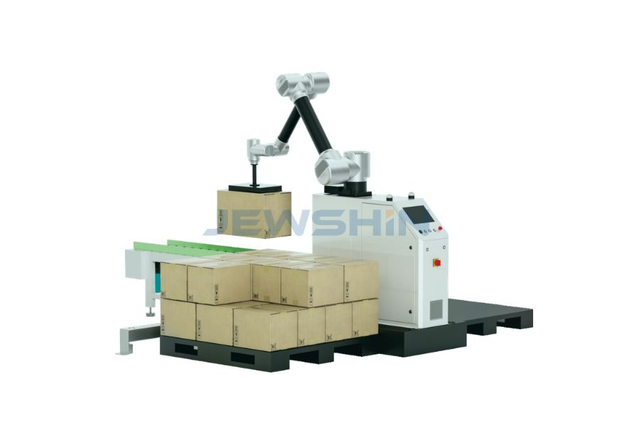
This becomes especially useful when sealing machinery is connected with end-of-line packaging equipment. Cartoners, case packers, case sealers, conveyors, labelers, checkweighers, and palletizing equipment need coordinated product flow so questionable packs are removed before secondary packaging. At 100 packs per minute, a 12-pack case can be filled roughly every 7.2 seconds, leaving little time for manual intervention once a defective package moves downstream.
Recipe management reduces another source of inconsistency: setup changes between products. A stored recipe can include sealing temperature, film feed length, timing, speed, registration offsets, filler settings, and other machine parameters. If a plant changes format 3 times during an 8-hour shift, manually entering 10 parameters at every change creates 30 individual entries where transcription mistakes could occur.
Access levels can restrict who changes process settings, while change records can show when a value was altered. Production records may store batch numbers, alarm history, temperatures, reject counts, downtime, machine speed, and recipe selection. In a 2026 quality system, that information is useful when a customer complaint refers to a specific lot because staff can compare the complaint time with recorded machine conditions.
Data recording does not make a weak sealing process reliable. It provides a time-based record that can show whether specified conditions were maintained and when a deviation began.
Maintenance determines whether those specified conditions remain physically achievable. Sealing faces accumulate residue, non-stick coverings wear, thermocouples age, pneumatic seals leak, bearings develop clearance, and cutting blades become dull. A temperature controller can still display its normal setpoint while a damaged sealing surface produces uneven contact, so maintenance checks need to cover mechanical condition as well as electronic readings.
Cleaning frequency should follow the product and packaging process rather than an arbitrary universal interval. A dry, clean film line may need less frequent sealing-face cleaning than equipment handling oily foods or fine powders. If residue reduces effective contact across 5% of a jaw surface, increasing temperature does not necessarily solve the underlying contact problem and may damage the remaining 95% that is already sealing normally.
Calibration provides another check on measurement accuracy. Temperature instruments, pressure devices, checkweighers, and other measurement systems should be verified according to the manufacturer's instructions and the site's quality procedures. A displayed 145°C is useful only when the measurement system has sufficient accuracy for the established sealing range; a ±5°C uncertainty is substantial if the acceptable process window is only 10°C wide.
Package design must also match the machine. Sealant chemistry, total film thickness, barrier layers, coatings, surface treatment, and package geometry influence sealing behavior. A polyethylene sealant layer does not necessarily use the same settings as a polypropylene-based structure, while foil-containing laminates can transfer heat differently from thin all-plastic films. Settings therefore need qualification after material changes rather than being copied from an unrelated film.
A practical qualification study can deliberately test conditions near the upper and lower operating limits. For example, engineers might evaluate 3 temperatures, 3 contact times, and 2 pressure settings, producing 18 process combinations before replication. Testing 10 specimens from each combination creates a 180-specimen data set that can show whether acceptable performance exists across a usable operating region rather than at one preferred setting.
Package integrity testing then needs to match the failure being investigated. Seal-strength testing measures mechanical separation force, while leak testing addresses openings through which gas or liquid can pass; the two results are related but not interchangeable. A mechanically strong seal may still contain a narrow channel caused by contamination, so a quality plan may use more than one test method for higher-risk products.
Statistical sampling also matters because checking one pack after a long production run provides little information about consistency. Sampling 5 packages every 30 minutes during an 8-hour shift gives 80 samples, while continuous sensor monitoring covers process conditions between those checks. The appropriate sample size and frequency depend on product risk, production history, applicable standards, customer requirements, and the manufacturer's quality system.
The same reasoning applies to hygienic design. Food and pharmaceutical packaging machinery often uses stainless-steel construction, accessible cleaning areas, protected electrical components, and layouts that reduce product accumulation. Equipment supplied for regulated applications may also be designed around applicable FDA, USDA, EHEDG, GMP, or European regulatory requirements depending on the product and market; compliance cannot be assumed from stainless-steel construction alone.
Seal integrity therefore comes from a controlled chain of measurable conditions. A 2026 production line making 6,000 packs per hour cannot depend on an operator visually examining every package. Temperature and motion controls maintain repeatability, film and filling systems keep the sealing area properly presented, sensors identify process deviations, inspection removes selected defects, laboratory tests quantify package performance, and maintenance keeps the physical sealing system within the conditions established during qualification.