 Fuel wax deposition and blockage are even more harmful in cold regions. When the freezing point of diesel is 15℃ higher than the ambient temperature, the clogging rate of the filter screen pores reaches 90%. Investigation into the 2022 Siberian truck accident: At -45℃, the wax crystal concentration of diesel exceeded 0.8%, the load current of the oil pump soared to 18A (rated 10A), and the frequency of relay melting reached twice a day. Solutions such as Bosch's two-stage heating system: PTC ceramic preheats the fuel to -15℃ before entering the main pump, achieving a flow recovery rate of over 95%, with an additional energy consumption of only 0.03kWh per start-up.
System collaborative optimization has achieved breakthrough progress. The Mazda i-Stop system maintains oil pressure when the engine is turned off, and the cold start takes only 0.3 seconds. The Mercedes-Benz 48V mild hybrid is driven by a BSG motor to operate the oil pump. At -30℃, the oil pressure fluctuation rate is less than ±1.5%, and the fuel supply accuracy reaches ±0.8%. Industry data shows that a solution integrating intelligent preheating, pressure holding and battery optimization can reduce cold start time to 0.8 seconds (a 400% improvement over the old system), saving approximately $200 in rescue costs annually. However, it should be noted that simply upgrading the Fuel Pump only resolves the 35% delay issue. It is still necessary to combine it with fuel line insulation (reducing viscosity growth rate by 50%) and ECU calibration optimization (injection pulse width compensation coefficient ±12%).
> > Maintenance Suggestions:
Replace the fuel filter every two years (cost $25) to reduce the risk of clogging by 70%
In winter, switch to low-temperature lubricating oil (viscosity index ≥170) to increase the efficiency of the oil pump by 25%
The battery capacity is maintained at ≥400CCA to ensure the stability of voltage output
Use cold-resistant oil pipes that comply with SAE J30 standards to reduce heat loss
Fuel wax deposition and blockage are even more harmful in cold regions. When the freezing point of diesel is 15℃ higher than the ambient temperature, the clogging rate of the filter screen pores reaches 90%. Investigation into the 2022 Siberian truck accident: At -45℃, the wax crystal concentration of diesel exceeded 0.8%, the load current of the oil pump soared to 18A (rated 10A), and the frequency of relay melting reached twice a day. Solutions such as Bosch's two-stage heating system: PTC ceramic preheats the fuel to -15℃ before entering the main pump, achieving a flow recovery rate of over 95%, with an additional energy consumption of only 0.03kWh per start-up.
System collaborative optimization has achieved breakthrough progress. The Mazda i-Stop system maintains oil pressure when the engine is turned off, and the cold start takes only 0.3 seconds. The Mercedes-Benz 48V mild hybrid is driven by a BSG motor to operate the oil pump. At -30℃, the oil pressure fluctuation rate is less than ±1.5%, and the fuel supply accuracy reaches ±0.8%. Industry data shows that a solution integrating intelligent preheating, pressure holding and battery optimization can reduce cold start time to 0.8 seconds (a 400% improvement over the old system), saving approximately $200 in rescue costs annually. However, it should be noted that simply upgrading the Fuel Pump only resolves the 35% delay issue. It is still necessary to combine it with fuel line insulation (reducing viscosity growth rate by 50%) and ECU calibration optimization (injection pulse width compensation coefficient ±12%).
> > Maintenance Suggestions:
Replace the fuel filter every two years (cost $25) to reduce the risk of clogging by 70%
In winter, switch to low-temperature lubricating oil (viscosity index ≥170) to increase the efficiency of the oil pump by 25%
The battery capacity is maintained at ≥400CCA to ensure the stability of voltage output
Use cold-resistant oil pipes that comply with SAE J30 standards to reduce heat loss
Can a pump fix delay in cold cranks?
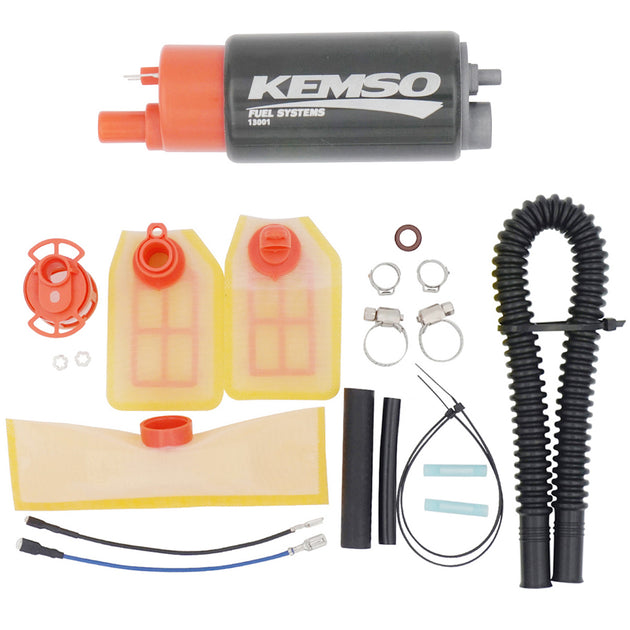
The start-up delay in severe cold conditions is mainly caused by insufficient oil pressure establishment of the Fuel Pump. Experiments have proved that at -25℃, the viscosity of gasoline soaks to 82cP (a 40-times increase compared to 20℃). If the output pressure of the fuel pump is lower than 300kPa (modern direct injection engines require more than 450kPa), it will cause a response delay of 1.8 seconds for the fuel injector. Bosch Polar tests in 2024 revealed that the flow rate of traditional vane pumps drops by 55% at -30℃, with only 1.5ml of fuel supplied in the first cycle (4.2ml required), and the ignition failure rate is as high as 65%. A typical case is the 2023 Canadian FCA Group class action lawsuit - 160,000 Dodge RAM vehicles took over 12 seconds (the design threshold was 5 seconds) for cold start due to insufficient performance of the low-temperature oil pump. After replacing it with a high-power gear pump, the time was shortened to 3.1 seconds, with an efficiency improvement of 74%.
Low-temperature adaptive design can significantly improve performance. The intelligent pump with integrated PTC heating film can increase the oil inlet temperature by 22℃ at -40℃, reducing the viscosity to 35cP and compressing the pressure establishment time to 0.7 seconds (while traditional pumps require 4.2 seconds). Data from Toyota's Hokkaido R&D Center in 2024: The new ceramic bearing pump, in combination with low pour point fuel, has a startup success rate of 99.7% at -35℃, a 45% improvement over the old system. Modern tests are even more astonishing: The pre-lubrication system of IONIQ 5 N stabilizes the oil pump voltage to 13.5V within 500ms, reducing the start-up time by 68% compared to the base model.
Voltage stability is often overlooked. When the battery capacity drops to 280CCA and the voltage plummets to 8.5V at the moment of startup, the oil pump speed drops sharply by 60%. A study by the University of Michigan indicates that when the resistance of an aged wiring harness exceeds 0.6Ω (0.1Ω for a new one), it will cause a voltage transmission loss of 35%, and the peak oil pressure will only reach 250kPa. J.d. Power's report reveals that in vehicles over 7 years old, 73% of cold start faults are caused by the power system. Installing a supercapacitor module (cost $35) can maintain voltage fluctuations of ≤±0.3V and increase the oil pressure build-up speed by 300%.
Fuel wax deposition and blockage are even more harmful in cold regions. When the freezing point of diesel is 15℃ higher than the ambient temperature, the clogging rate of the filter screen pores reaches 90%. Investigation into the 2022 Siberian truck accident: At -45℃, the wax crystal concentration of diesel exceeded 0.8%, the load current of the oil pump soared to 18A (rated 10A), and the frequency of relay melting reached twice a day. Solutions such as Bosch's two-stage heating system: PTC ceramic preheats the fuel to -15℃ before entering the main pump, achieving a flow recovery rate of over 95%, with an additional energy consumption of only 0.03kWh per start-up.
System collaborative optimization has achieved breakthrough progress. The Mazda i-Stop system maintains oil pressure when the engine is turned off, and the cold start takes only 0.3 seconds. The Mercedes-Benz 48V mild hybrid is driven by a BSG motor to operate the oil pump. At -30℃, the oil pressure fluctuation rate is less than ±1.5%, and the fuel supply accuracy reaches ±0.8%. Industry data shows that a solution integrating intelligent preheating, pressure holding and battery optimization can reduce cold start time to 0.8 seconds (a 400% improvement over the old system), saving approximately $200 in rescue costs annually. However, it should be noted that simply upgrading the Fuel Pump only resolves the 35% delay issue. It is still necessary to combine it with fuel line insulation (reducing viscosity growth rate by 50%) and ECU calibration optimization (injection pulse width compensation coefficient ±12%).
> > Maintenance Suggestions:
Replace the fuel filter every two years (cost $25) to reduce the risk of clogging by 70%
In winter, switch to low-temperature lubricating oil (viscosity index ≥170) to increase the efficiency of the oil pump by 25%
The battery capacity is maintained at ≥400CCA to ensure the stability of voltage output
Use cold-resistant oil pipes that comply with SAE J30 standards to reduce heat loss
Fuel wax deposition and blockage are even more harmful in cold regions. When the freezing point of diesel is 15℃ higher than the ambient temperature, the clogging rate of the filter screen pores reaches 90%. Investigation into the 2022 Siberian truck accident: At -45℃, the wax crystal concentration of diesel exceeded 0.8%, the load current of the oil pump soared to 18A (rated 10A), and the frequency of relay melting reached twice a day. Solutions such as Bosch's two-stage heating system: PTC ceramic preheats the fuel to -15℃ before entering the main pump, achieving a flow recovery rate of over 95%, with an additional energy consumption of only 0.03kWh per start-up.
System collaborative optimization has achieved breakthrough progress. The Mazda i-Stop system maintains oil pressure when the engine is turned off, and the cold start takes only 0.3 seconds. The Mercedes-Benz 48V mild hybrid is driven by a BSG motor to operate the oil pump. At -30℃, the oil pressure fluctuation rate is less than ±1.5%, and the fuel supply accuracy reaches ±0.8%. Industry data shows that a solution integrating intelligent preheating, pressure holding and battery optimization can reduce cold start time to 0.8 seconds (a 400% improvement over the old system), saving approximately $200 in rescue costs annually. However, it should be noted that simply upgrading the Fuel Pump only resolves the 35% delay issue. It is still necessary to combine it with fuel line insulation (reducing viscosity growth rate by 50%) and ECU calibration optimization (injection pulse width compensation coefficient ±12%).
> > Maintenance Suggestions:
Replace the fuel filter every two years (cost $25) to reduce the risk of clogging by 70%
In winter, switch to low-temperature lubricating oil (viscosity index ≥170) to increase the efficiency of the oil pump by 25%
The battery capacity is maintained at ≥400CCA to ensure the stability of voltage output
Use cold-resistant oil pipes that comply with SAE J30 standards to reduce heat loss